Tree Trunk Injections in Aurora & Denver, CO
Direct-injection therapy that delivers treatments exactly where trees need them — bypassing soil and delivering faster, more effective results than sprays or soil treatments alone.
What Are Tree Trunk Injections?
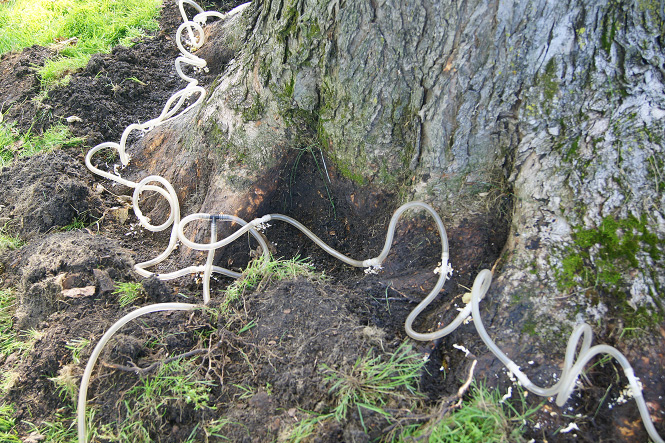
Tree trunk injection is a targeted treatment method where a measured dose of insecticide, fungicide, or fertilizer is delivered directly into a tree's vascular system through small ports drilled into the bark. Once injected, the tree's own vascular system — the xylem and phloem — distributes the treatment throughout the canopy, reaching leaves, branches, and shoots that surface sprays often miss.
Trunk injections are particularly valuable in Colorado's Front Range environment, where alkaline soils block nutrient absorption, where emerald ash borer is actively spreading, and where aerial spraying is restricted or ineffective. The result is a more targeted treatment with no drift, no runoff, and no exposure to pollinators.
Colorado Department of Agriculture licensed. Derek Stroden holds a CDA Certified Spray Supervisor license — the credential required to legally apply the restricted-use pesticides used in trunk injection treatments. Not all tree companies can legally offer this service.
2003
Year Founded in Aurora, CO
25,000+
Residential Clients Served
1,000+
Commercial Clients
4.8
Average Rating
What We Treat with Trunk Injections
Emerald Ash Borer (EAB) — Emamectin Benzoate
Emerald ash borer is the single most urgent tree health threat in the Aurora and Denver metro area. EAB larvae bore beneath the bark and destroy the vascular tissue that carries water and nutrients — an infested ash tree will die within 3–5 years without treatment. Trunk injection with emamectin benzoate (sold as TREE-äge) is the most effective EAB treatment available, with a single application providing two years of protection. Trees that are less than 40% declined respond extremely well to treatment. If you have ash trees on your property, do not wait — call us for an assessment.
Iron Chlorosis — Chelated Iron Injection
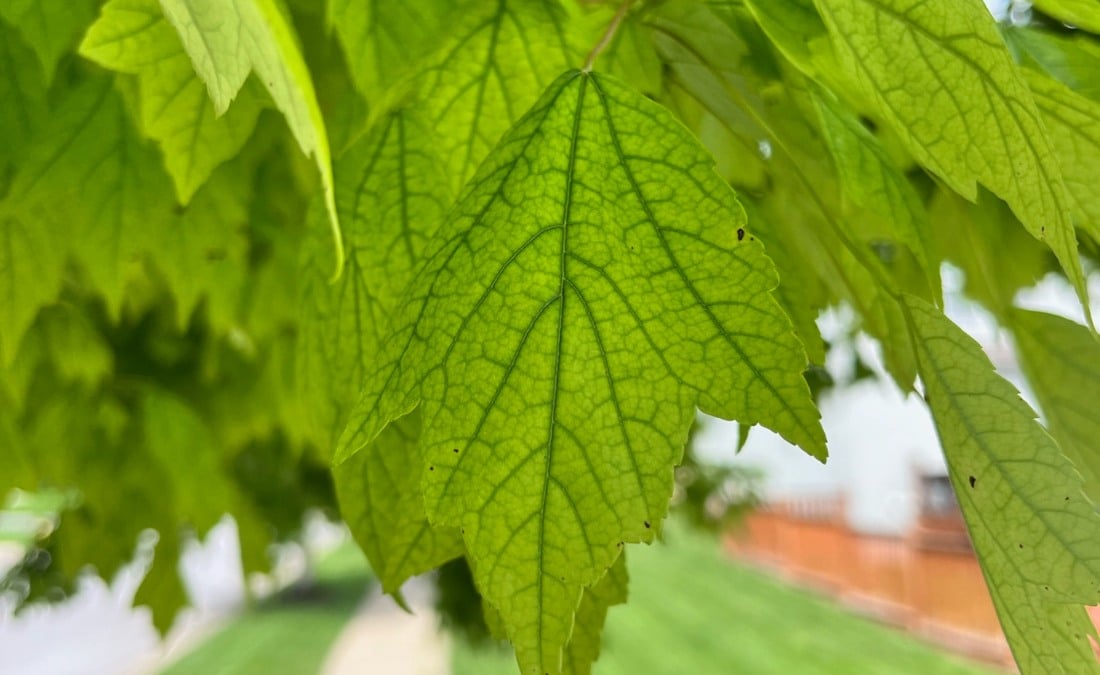
Aurora and Denver's soils are highly alkaline, which locks iron into a form tree roots cannot absorb. The result is iron chlorosis: leaves turn yellow between the veins while the veins themselves remain green. Affected trees look sick and decline over time if untreated. Trunk injection with chelated iron bypasses the soil entirely, delivering bioavailable iron directly into the vascular system. Results are typically visible within 4–6 weeks of treatment, and the effect lasts 1–2 growing seasons.
Species most commonly affected in Colorado: pin oaks, red maples, river birch, sweetgums, and cottonwood. If your tree looks like it's slowly yellowing despite regular watering, iron chlorosis is a likely culprit.
Scale Insects & Systemic Pests — Imidacloprid / Dinotefuran

Oystershell scale, lecanium scale, and other sucking insects are difficult to control with surface sprays because their protective shells block contact. Systemic insecticides delivered via trunk injection move through the tree's vascular system and are absorbed directly by the feeding insects. We select the appropriate active ingredient and application rate based on the pest species, tree size, and season.
Anthracnose & Fungal Disease — Fungicide Injection
Certain fungal diseases — including anthracnose in sycamores and maples, and Dothistroma needle blight in pines — respond to fungicide trunk injection when applied at the correct time in the disease cycle. This approach is especially effective when tree canopy size makes aerial treatment impractical or when environmental conditions restrict spraying.
Micronutrient Deficiencies — Nutrient Injection
Beyond iron, Colorado's alkaline soils commonly lock out manganese, zinc, and other micronutrients essential to tree health. We can deliver targeted micronutrient blends via trunk injection as part of a broader plant health care program — particularly for high-value ornamental trees where performance and appearance matter.
Why Trunk Injection vs. Soil Treatment or Spraying?
Soil injection or drench applications rely on roots absorbing the treatment through the soil — which works poorly in compacted or alkaline soils like those common in Aurora and Denver. Aerial spraying requires the canopy to be accessible and poses risks of drift, runoff, and off-target exposure. Trunk injection bypasses both problems: the treatment goes directly into the vascular system, uptake is fast, and there is no environmental drift.
The tradeoff is precision — trunk injections require the right active ingredient, the right dose, the right timing in the pest or disease cycle, and proper port placement. That's exactly why this service is performed only by our licensed arborists, not subcontracted to a spray technician.
Is Trunk Injection Safe for My Tree?
When performed correctly, trunk injection causes minimal stress to the tree. The small injection ports heal over within a single growing season in healthy trees. Our arborists follow ANSI A300 Part 7 guidelines and manufacturer protocols for port spacing, injection pressure, and dose rates to ensure treatment effectiveness without causing unnecessary wounding.
How Ironwood Earthcare Approaches Tree Injections
Every trunk injection engagement begins with a site visit and a diagnosis. We assess the tree's current health, confirm the pest or deficiency we're treating, and determine whether injection is the right tool for that specific situation — or whether a different approach would produce better outcomes. We don't inject trees that can't benefit from it, and we won't recommend treatment on trees that are too far declined to respond.
Protect Your Trees Before the Damage Is Done
Trunk injection works best early. The longer you wait on EAB, iron chlorosis, or systemic pests, the fewer options you have.
COMPANY
CUSTOMER CARE
LEGAL
FOLLOW US


© Copyright 2026. Ironwood Earthcare. All Rights Reserved.