Tree Removal Cost in Denver: 2026 Pricing Guide
Tree Removal, Denver Metro, Pricing Guide, Professional Arborist
Tree Removal Cost in the Denver Metro: What to Expect and How to Get the Best Value
If you’re a homeowner in the Denver metro area facing a problem tree, you’re probably wondering what tree removal really costs in 2026—and how to choose a company you can trust. This guide breaks down current Denver pricing, the key factors that affect your quote, and why working with a fully insured, certified arborist like Derek Stroden of Ironwood is the safest, smartest investment for your property.
How Much Does Tree Removal Cost in the Denver Metro in 2026?
Tree removal pricing in Denver runs a bit higher than the national average, largely because of higher labor and permit costs. Most reputable sources agree that most homeowners can expect to pay between about $300 and $1,500 per tree, depending on size and complexity (Angi; LandscapioAI; Costorie). Smaller, straightforward jobs fall toward the lower end, while large or hazardous trees can go much higher.
Tree Size / Complexity Typical Denver Metro Range (2026) Small (<30 ft) ~$300–$800 (some as low as $150) Medium (30–60 ft) ~$450–$1,500 (often $800–$1,400) Large (60–80 ft) ~$800–$3,800 Very large / tight access / complex Up to $5,000+ in difficult cases
Some companies also price by trunk diameter, often between $8 and $12 per inch on average, with complex jobs going as high as $25 per inch for very challenging removals (Adnan Painting & Remodeling).
📌 Key Takeaway: In Denver, a typical homeowner removing a single tree will usually fall in the $300–$1,500 range, with costs increasing as trees get taller, harder to reach, or more hazardous.
The Four Big Factors That Influence Tree Removal Cost
1. Tree Size: Height, Diameter, and Branch Spread
Size is usually the first thing a professional arborist looks at. Taller, wider trees with thicker trunks simply take more time, labor, and equipment to remove safely. In Denver, small trees under 30 feet often cost a few hundred dollars to remove, while large trees over 60 or 80 feet may run into the low thousands (Angi; Costorie; CribbFam / NestNavigator).
Small ornamental or fruit trees (under ~30 ft) are usually the most affordable to remove and may not require heavy equipment.
Medium shade trees (30–60 ft), such as many maples or ash, often fall in the mid-range pricing because they require more climbing, rigging, and time.
Large and very large trees (60+ ft), including mature cottonwoods or elms common along the Front Range, are the most expensive, especially if they are close to homes or power lines.
2. Access: How Easy Is It to Reach Your Tree?
Access is one of the most overlooked cost drivers. A tree that a bucket truck can pull right up to is much faster (and therefore cheaper) to remove than a tree squeezed between houses, behind a fence, or perched on a steep Denver hillside. Tight backyards in older neighborhoods, narrow alleys, and limited street parking can all add time and complexity.
If crews must hand-carry sections a long distance or use specialized rigging to avoid structures, expect your quote to reflect that extra labor.
If a crane is needed to safely lift large sections over a home or garage, the cost can increase significantly due to equipment rental and additional crew members.
3. Tree Condition: Healthy, Diseased, or Hazardous?
The condition of your tree has a direct impact on safety—and therefore cost. A healthy tree with strong wood is more predictable to climb and rig. A dead, decaying, or storm-damaged tree can be brittle and unpredictable, requiring extra precautions, time, and sometimes specialized techniques or equipment to keep everyone safe.
Dead or dying trees may need to be taken down in smaller sections to avoid sudden breakage, which increases labor hours.
Leaning or storm-damaged trees can behave unpredictably under load, so certified arborists will build in extra safety measures and may charge more to reflect the higher risk.
⚠️ Safety Note: Hazardous trees are not DIY projects. In Denver’s dense neighborhoods, a falling trunk or limb can damage multiple properties or injure bystanders. Always call a certified, insured arborist for dangerous removals.
4. Add-On Services: What’s Included in Your Quote?
Two quotes that look very different on paper may actually be closer than they appear once you factor in what is—and isn’t—included. When comparing estimates, always ask about add-on services that can influence your final cost:
Stump grinding: Removing the stump is usually billed separately. Prices often range from a modest fee for a small stump to a few hundred dollars for large, deep-rooted stumps, depending on diameter and access.
Debris haul-off and chipping: Some homeowners want logs left for firewood or chips left on-site; others prefer a completely clean yard. Full cleanup and haul-away will add cost but save you significant time and effort.
Emergency or after-hours service: If a tree has come down in a storm or is threatening your home, crews may need to respond immediately, sometimes at night or on weekends. That urgency is typically reflected in the price.
Permits and city requirements: In some cases—especially if the tree is in the public right-of-way or considered protected—Denver may require permits. A professional company can help you navigate this so you avoid fines or delays (PermitDeck; Denver Parks & Recreation).
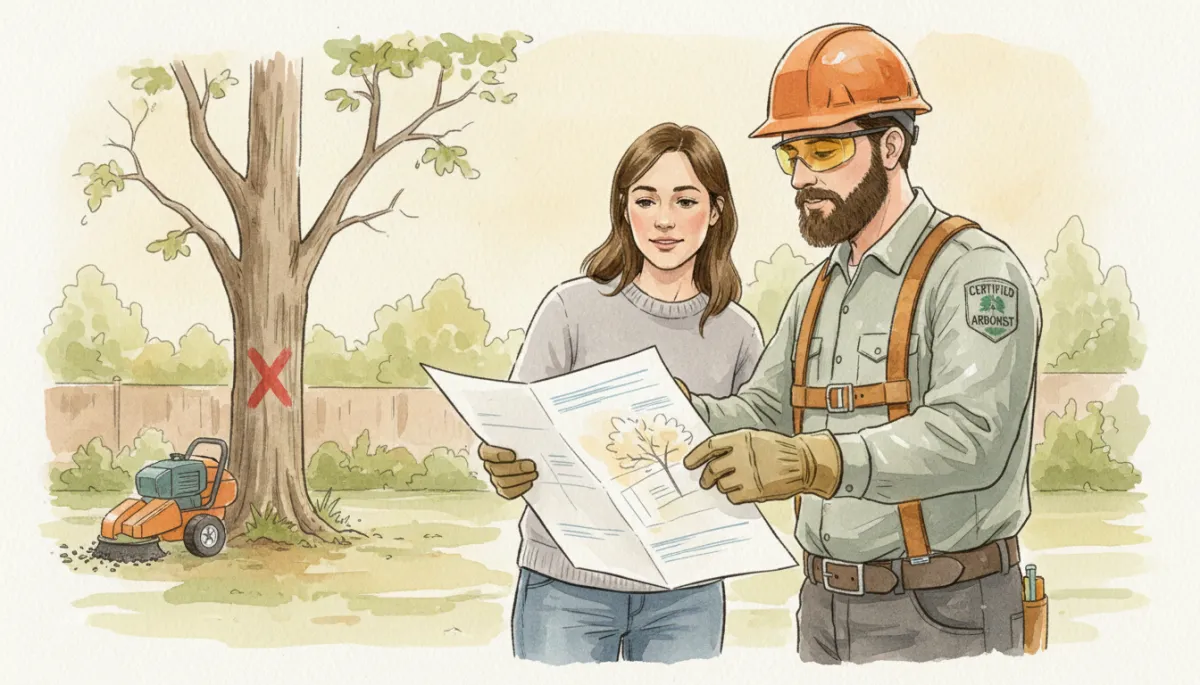
Close-up of a certified arborist in safety gear explaining a printed tree removal estimate to a...
Clear, line-by-line estimates help Denver homeowners understand exactly what they’re paying for.
Why Choosing a Fully Insured, Certified Arborist Matters
Tree removal is one of the most dangerous services performed on residential properties. It involves heavy logs, powerful equipment, heights, and often tight spaces around homes, fences, vehicles, and power lines. That’s why Denver’s City Forester maintains an official list of licensed tree contractors—and why hiring a fully insured, certified arborist is essential, not optional (denvergov.org).
A certified arborist like Derek Stroden of Ironwood brings more than just technical skill. With over 20 years of experience, Derek understands how Denver’s altitude, soil conditions, and climate stress trees—and how to remove them safely with minimal impact on your property. Certification means he has formal training in tree biology, structural assessment, and industry-standard safety practices. Insurance means that if the unexpected happens, you and your home are protected.
Liability protection: If a branch falls and damages a roof or a fence, proper insurance coverage keeps you from being left with the bill.
Worker safety: Fully insured crews are trained and equipped to work at height, operate saws and chippers, and manage rigging safely—protecting both workers and your family.
Compliance with city standards: Certified professionals follow ANSI A300 and Z133 safety standards, which align with what Denver expects from licensed contractors.
💡 Pro Tip: Always ask for proof of insurance and certifications before hiring a tree company. A reputable arborist like Ironwood will gladly provide documentation and explain how they protect your property.
The Value of a Free, No-Obligation Quote
Because so many variables affect tree removal cost—size, access, condition, add-on services—online calculators and “ballpark” estimates can only take you so far. That’s why a free, no-obligation on-site quote is so valuable.
When you schedule a visit with Ironwood, Derek or another experienced arborist comes to your property, evaluates the tree’s health and structure, notes any nearby risks (like roofs, sheds, or power lines), and talks through your goals—whether that’s full removal, selective pruning, or stump grinding. You’ll receive a clear estimate that spells out:
Exactly what work will be done (full removal, partial removal, debris cleanup, stump grinding, etc.)
How long the job will take and how many crew members or pieces of equipment are required
What’s included in the price and what would be considered an optional add-on
There’s no pressure and no obligation. You’re free to compare quotes, ask questions, and move forward only when you’re comfortable. For many Denver homeowners, that peace of mind is just as important as the final number on the page.
Safety and Professionalism: What Sets Ironwood Apart
Not all tree services are created equal. Ironwood has built its reputation in the Denver metro on safety-first practices, professional crews, and consistent communication. Under the leadership of certified arborist Derek Stroden, Ironwood approaches every job—large or small—with the same disciplined process:
Thorough assessment: Before any cuts are made, the team evaluates tree structure, lean, decay, and surrounding hazards. This planning phase is crucial for safe rigging and controlled removal.
Proper equipment and PPE: Crews arrive with helmets, eye and ear protection, chainsaw chaps, ropes, harnesses, and, when needed, bucket trucks or cranes. This isn’t just about compliance; it’s about ensuring everyone goes home safe.
Clear communication with homeowners: You’ll know when the crew will arrive, how the work will be staged, where equipment will be parked, and what to expect during and after the job.
Detailed cleanup: A professional job doesn’t end when the tree is on the ground. Ironwood’s crews chip branches, stack or haul logs per your agreement, and rake or blow debris so your yard looks cared for—not like a construction site.
📌 Key Takeaway: Safety and professionalism aren’t “extras”—they are built into every step of Ironwood’s process, from the first assessment to the final cleanup.
Why Ironwood Offers the Best Value in the Denver Metro
In a market with many licensed tree services, why do so many homeowners choose Ironwood—and refer friends and neighbors year after year? The answer comes down to value: the balance of price, expertise, safety, and long-term peace of mind.
Experienced leadership: With over 20 years in the industry, Derek Stroden has seen almost every scenario Denver trees can present—from wind-twisted spruces to towering cottonwoods over homes. That experience means fewer surprises and more efficient, predictable jobs.
Certified and fully insured: Ironwood meets and exceeds Denver’s licensing requirements, carries robust insurance, and follows industry standards. You’re not just paying for a removal—you’re paying for protection and professionalism.
Transparent, fair pricing: Quotes are detailed and easy to understand, with no hidden fees. You’ll know exactly what’s included and what optional services cost before work begins.
Respect for your property: Crews take care to protect lawns, driveways, and landscaping as much as possible, using ground protection mats and careful staging when needed. When the job is done, your property is left neat and orderly.
Local knowledge: Ironwood understands Denver’s specific tree challenges—like drought stress, late-spring snowstorms, and high-wind events—and can advise you on whether a tree truly needs to come down or if targeted pruning or health care could extend its life.
The cheapest quote isn’t always the best value. A low price from an uninsured or inexperienced operator can turn into a very expensive problem if something goes wrong. Ironwood focuses on giving you a fair, competitive price backed by professional standards, so you get lasting value—not just a short-term bargain.
What to Expect When You Call Ironwood for Tree Removal
If you’re ready to explore tree removal for your Denver metro property, the process with Ironwood is simple and straightforward:
Initial contact: You reach out by phone or online and briefly describe your tree, its location, and any urgent concerns (like visible cracking, leaning, or storm damage).
On-site assessment: Derek or another qualified arborist visits your property, examines the tree’s health and structure, and notes access challenges. They’ll also discuss your goals and answer your questions.
Free, no-obligation quote: You receive a clear written estimate outlining the scope of work and total cost. You can review it at your own pace—no pressure, no surprise add-ons later.
Scheduling and preparation: Once you approve the quote, Ironwood schedules the work and lets you know if any simple preparations are needed, such as moving vehicles or patio furniture to provide access.
Safe, efficient removal: On the scheduled day, the crew arrives on time, walks you through the plan, and completes the work using safe, professional techniques tailored to your property.
Cleanup and walkthrough: Debris is handled according to your quote, the site is cleaned, and you have a chance to walk the property with the crew leader and confirm everything meets your expectations.
Ready to Understand Your Tree Removal Cost?
Every tree, every yard, and every situation is different. Online averages are helpful, but they can’t replace an expert set of eyes on your actual tree. If you’re in the Denver metro and wondering what it will really cost to remove a tree safely, the next step is simple: request a free, no-obligation quote from Ironwood.
You’ll get clear pricing, honest recommendations, and the confidence that comes from working with a fully insured, certified arborist with more than two decades of experience in Denver’s unique urban forest. Whether you’re dealing with a hazardous tree, planning a landscape renovation, or simply curious about your options, Ironwood is ready to help you make a safe, informed decision—and get the best value for your investment.


